Department of Gastroenterology & Hepatology
Hernia: Symptoms, Types & Modern Surgical Treatment
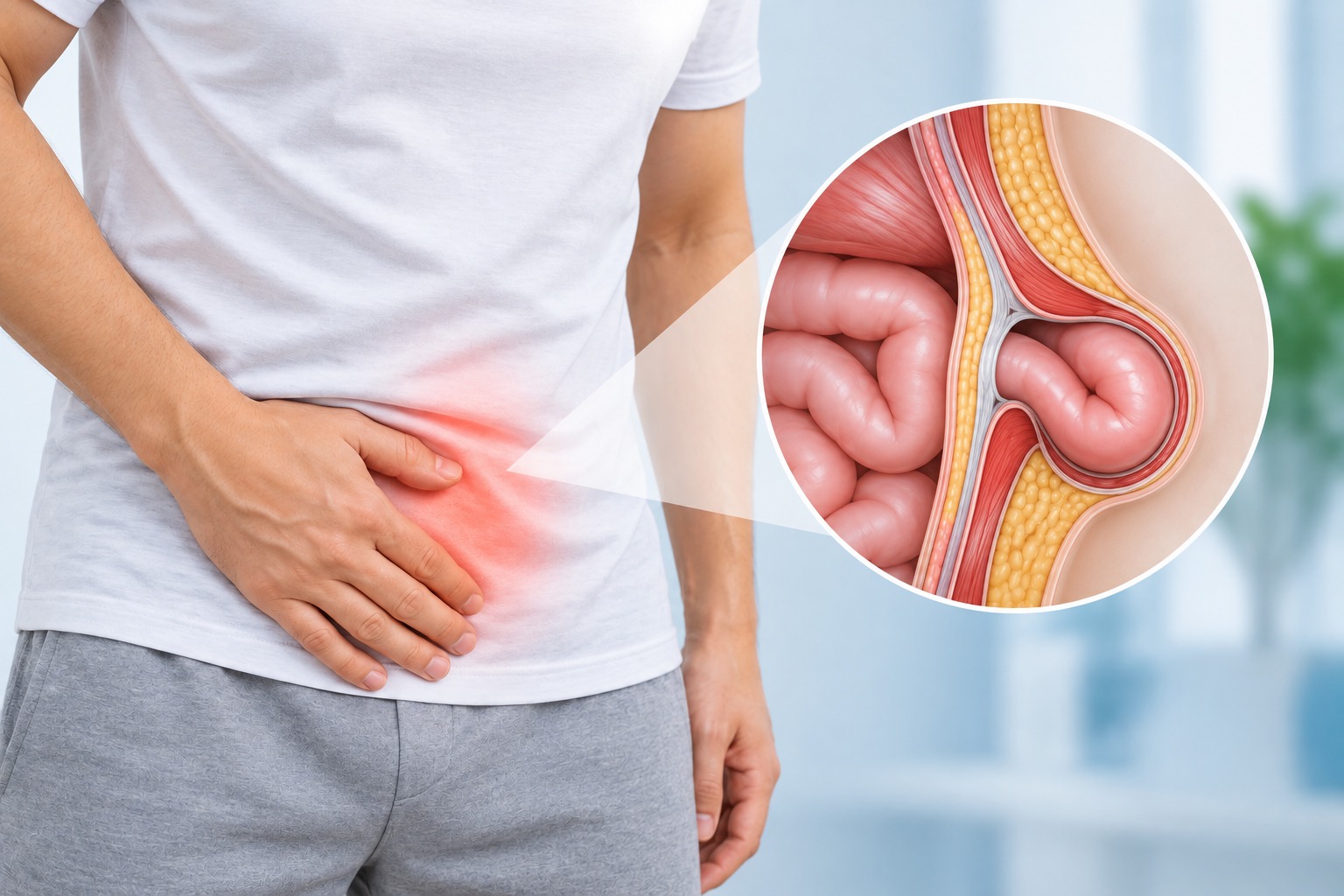
A hernia occurs when an internal organ or tissue pushes through a weak area in the surrounding muscle or abdominal wall. Hernias commonly develop in the groin or abdomen and may cause a visible lump or discomfort.
While some hernias may initially be painless, they can gradually increase in size and may require surgical treatment. Timely evaluation helps determine the most appropriate surgical method before complications develop.
Some common types include:
- Inguinal hernia: Occurs in the inner groin region, most common in men.
- Femoral hernia: Appears in the upper thigh/outer groin area, more common in women.
- Umbilical and paraumbilical hernia: Develops near the belly button (navel).
- Incisional hernia: Emerges through a previous surgical incision site.
- Recurrent hernia: A hernia that reappears at the site of previous repair.
Common symptoms may include:
- A visible or palpable lump in the abdomen or groin
- Pain or discomfort, especially when straining
- Heaviness in the abdomen or groin
- Increased discomfort while coughing, bending or heavy lifting
- A bulge that becomes more prominent while standing
Some hernias may not cause significant symptoms initially, but they should still be evaluated by a doctor to prevent enlargement or strangulation.
Treatment depends on the type, size and symptoms of the hernia. Surgical repair is generally recommended for symptomatic or enlarging hernias, as hernias do not heal on their own.
Depending on the condition, modern surgical options include:
- Laparoscopic hernia repair (Keyhole Surgery): Minimally invasive repair using high-definition cameras and small incisions, allowing quick return to routine activities.
- Open hernia repair: Traditional surgical repair with tension-free mesh reinforcement.
- Complex abdominal wall reconstruction: For large, recurrent, or complicated ventral hernias.
The appropriate surgical approach is decided after clinical examination and necessary investigations.
Seek immediate medical attention if you experience:
- Sudden, severe pain in the hernia area
- Nausea or vomiting
- Abdominal swelling or inability to pass gas/stool
- A painful lump that turns red/purple or cannot be pushed back (incarcerated or strangulated)
These symptoms indicate obstruction or strangulation (loss of blood supply to trapped tissue) and require urgent emergency surgical treatment. Gangasheel Hospital provides 24x7 emergency surgical management in Bareilly.
A hernia should not be ignored, especially when it causes pain or gradually increases in size. Early evaluation can help determine the appropriate treatment and reduce the risk of acute complications.
For evaluation and treatment of hernia and other gastrointestinal surgical conditions, consult the Department of Gastroenterology & Hepatology at Gangasheel Hospital, Bareilly.
Gangasheel Hospital provides state-of-the-art diagnostic ultrasound and CT imaging, advanced modular operating theatres for 3D/4K laparoscopic hernia repair, tension-free modern mesh technology, expert gastrointestinal and laparoscopic surgeons, and 24x7 dedicated emergency and ICU care.